
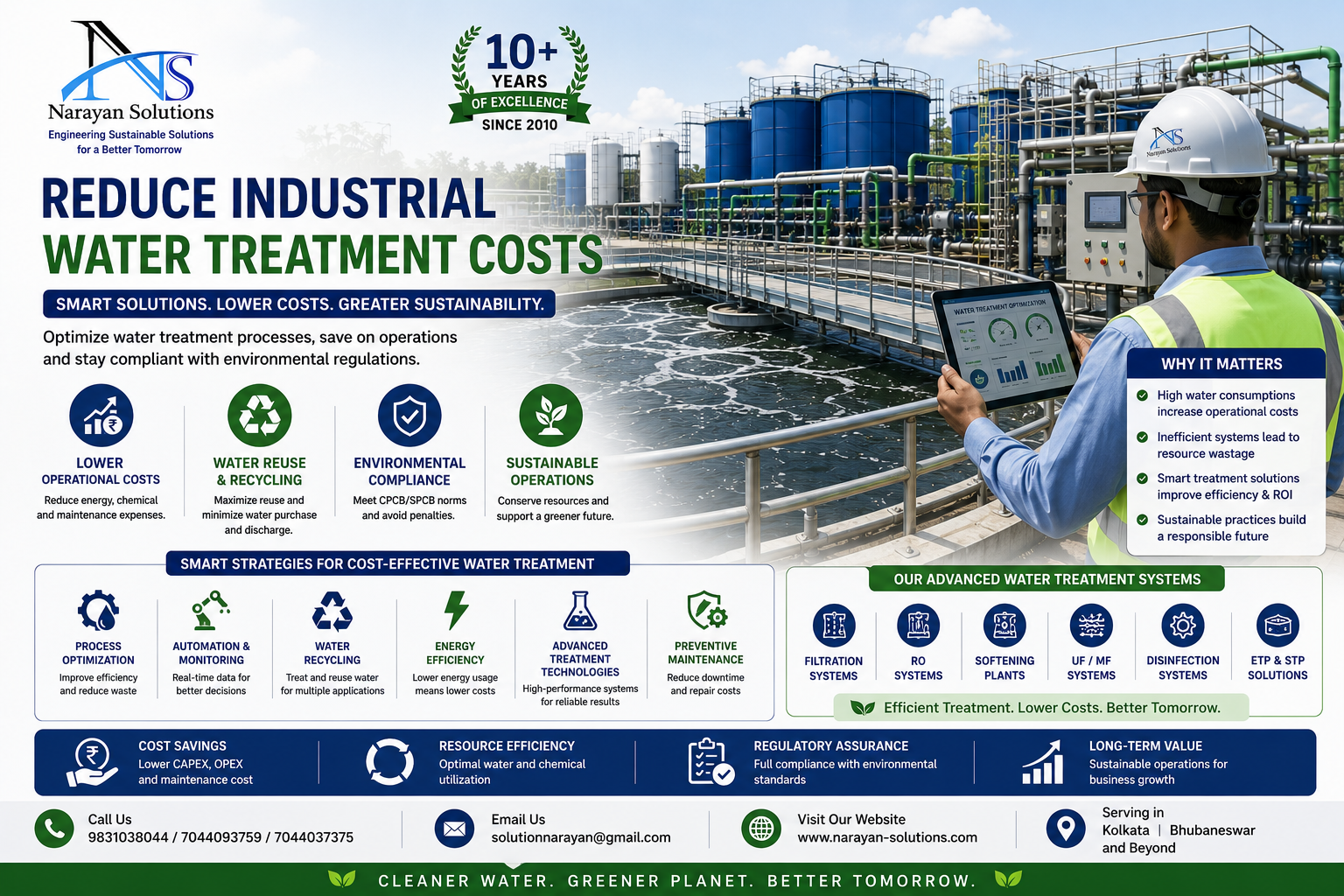
Smart Strategies for Cost-Effective and Sustainable Water Management
Industrial water treatment is essential for maintaining operational efficiency, environmental responsibility, and regulatory compliance. However, rising utility expenses, increasing wastewater treatment requirements, stricter environmental regulations, and growing water scarcity are causing many industries to face significant water management costs.
Market research shows that industrial facilities are increasingly focusing on water optimization, recycling technologies, automation systems, and preventive maintenance strategies to reduce treatment expenses while maintaining compliance with environmental standards.
The good news is that reducing water treatment costs does not mean compromising performance or regulatory requirements. With proper planning and efficient technologies, industries can significantly lower operational expenses while improving sustainability.
Why Industrial Water Treatment Costs Are Rising
Several factors contribute to increasing water treatment expenses:
- Higher freshwater procurement costs
- Rising energy consumption
- Increasing wastewater disposal charges
- Stricter environmental regulations
- Chemical treatment expenses
- Equipment maintenance costs
- Water scarcity challenges
Industries that proactively optimize their treatment systems often achieve substantial long-term savings.
Conduct a Comprehensive Water Audit
One of the most effective ways to reduce costs is by conducting a detailed water audit.
A professional water audit helps identify:
- Areas of excessive water consumption
- Process inefficiencies
- Water losses and leakages
- Opportunities for recycling and reuse
- Equipment performance issues
Many industries discover significant cost-saving opportunities simply by understanding how water is being used throughout their facility.
Implement Water Recycling and Reuse Programs
Water recycling has become one of the most important trends in industrial water management.
Treated wastewater can often be reused for:
- Cooling tower operations
- Equipment washing
- Utility processes
- Landscaping
- Boiler feed pre-treatment
Benefits include:
- Reduced freshwater demand
- Lower utility expenses
- Reduced wastewater discharge
- Improved sustainability performance
Water reuse programs frequently provide some of the fastest returns on investment for industrial facilities.
Upgrade to Energy-Efficient Treatment Systems
Older treatment systems often consume more electricity and require higher maintenance.
Modern treatment technologies offer:
- Lower energy consumption
- Improved treatment efficiency
- Reduced chemical usage
- Automated operations
- Better monitoring capabilities
Upgrading pumps, blowers, motors, and control systems can significantly reduce operating costs.
Optimize Chemical Consumption
Chemical costs represent a major portion of industrial water treatment expenses.
Industries can reduce chemical usage through:
- Proper dosing control
- Automated monitoring systems
- Water quality analysis
- Process optimization
- Advanced treatment technologies
Accurate dosing not only reduces costs but also improves treatment performance and compliance.
Utilize Automation and Smart Monitoring
Digital monitoring systems are becoming increasingly popular in industrial water treatment.
Automation provides:
- Real-time performance tracking
- Early fault detection
- Reduced manual intervention
- Optimized chemical dosing
- Improved operational efficiency
Smart monitoring systems help prevent costly breakdowns and reduce unnecessary resource consumption.
Invest in Preventive Maintenance
Many industries spend large amounts on emergency repairs that could have been avoided through preventive maintenance.
Routine maintenance helps:
- Extend equipment life
- Prevent costly failures
- Improve treatment efficiency
- Reduce downtime
- Maintain compliance standards
Regular inspection and servicing ensure treatment systems operate at peak performance.
Improve ETP and WTP Performance
Effluent Treatment Plants (ETP) and Water Treatment Plants (WTP) should be periodically evaluated for efficiency.
Optimization may include:
- Process modifications
- Equipment upgrades
- Automation integration
- Flow balancing
- Sludge reduction strategies
Even small improvements can generate significant annual savings.
Adopt Zero Liquid Discharge (ZLD) Where Feasible
Industries with high water consumption are increasingly exploring Zero Liquid Discharge (ZLD) systems.
Benefits include:
- Maximum water recovery
- Reduced wastewater disposal costs
- Improved environmental compliance
- Long-term water security
While ZLD requires initial investment, it can provide substantial savings over time for suitable industries.
Ensure Regulatory Compliance Efficiently
Compliance failures can result in:
- Financial penalties
- Legal issues
- Production interruptions
- Reputation damage
The most cost-effective approach is proactive compliance management through:
- Regular testing
- Monitoring systems
- Preventive maintenance
- Process optimization
Compliance should be viewed as a cost-saving strategy rather than an expense.
Benefits of Cost-Optimized Water Treatment
Industries that optimize their water treatment systems often experience:
- Lower operational costs
- Reduced energy consumption
- Improved equipment reliability
- Enhanced sustainability performance
- Better regulatory compliance
- Increased profitability
These advantages create both environmental and financial benefits.
The Future of Industrial Water Management
Global trends indicate that water conservation and wastewater recycling will become increasingly important. Industries that invest in efficient treatment technologies today will be better positioned to manage future regulatory and resource challenges.
Modern water management strategies focus on sustainability, automation, resource recovery, and operational efficiency. These approaches not only reduce costs but also strengthen long-term business resilience.
Conclusion
Reducing industrial water treatment costs does not require sacrificing compliance or performance. Through water audits, recycling programs, automation, preventive maintenance, and efficient treatment technologies, industries can significantly reduce expenses while maintaining environmental responsibility.
A strategic approach to water management enables organizations to achieve sustainable operations, lower utility costs, and long-term regulatory compliance.
Contact Us
📞 Call: 9831038044 / 7044093759 / 7044037375
🌐 Website: https://narayan-solutions.com
📩 Email: solutionnarayan@gmail.com
FAQs
- What is the quickest way to reduce industrial water treatment costs?
Conducting a water audit often identifies immediate opportunities for savings through efficiency improvements. - How does water recycling reduce operating expenses?
Reusing treated water lowers freshwater consumption and reduces wastewater disposal costs. - Can automation improve water treatment efficiency?
Yes. Automation optimizes operations, reduces manual errors, and lowers energy and chemical consumption. - Why is preventive maintenance important for treatment plants?
Preventive maintenance prevents breakdowns, reduces repair costs, and improves system performance. - Does reducing treatment costs affect environmental compliance?
No. Proper optimization strategies reduce costs while maintaining full regulatory compliance. - What industries benefit most from water treatment optimization?
Manufacturing, chemical, pharmaceutical, food processing, textile, and engineering industries benefit significantly. - Is investing in advanced treatment technology worth the cost?
Modern systems often provide long-term savings through improved efficiency, lower maintenance, and reduced resource consumption.
Industrial Water Treatment Costs | Water Treatment Cost Reduction | Industrial Wastewater Management | Water Recycling Solutions | ETP Optimization | STP Operation Maintenance | Industrial Water Reuse | Wastewater Treatment Compliance | Water Treatment Efficiency | Industrial Utility Cost Savings | Sustainable Water Management | ETP AMC Services